


Winter tire requirements take effect Thirsday on designated highways across the Kootenays as colder overnight temperatures return to parts of the region.
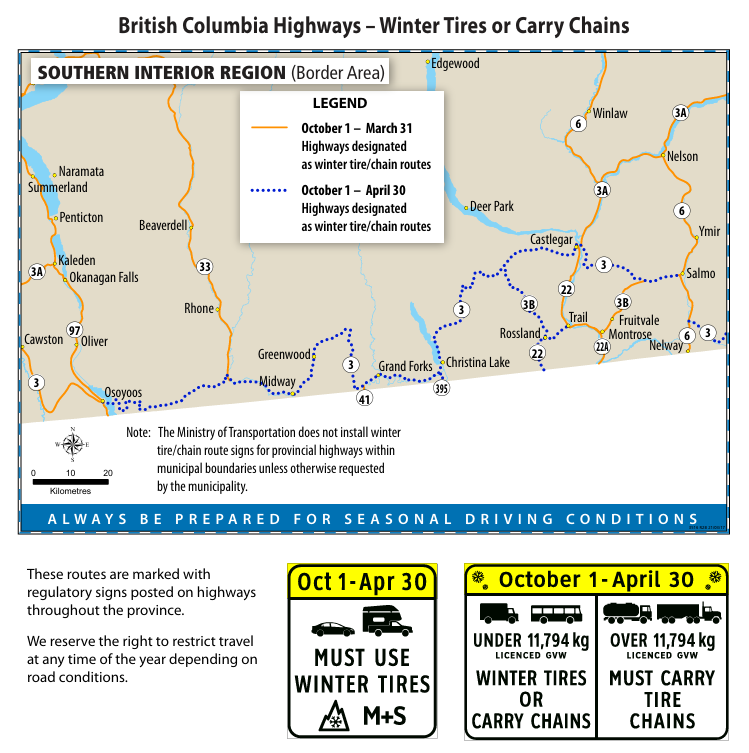
B.C. requires passenger vehicles and light trucks travelling on designated routes to use winter-rated tires beginning Oct. 1. Tires must display either the M+S marking or the three-peaked mountain and snowflake symbol and have at least 3.5 millimetres of tread.
Road Safety at Work is using the start of the winter driving season to urge motorists to consider more than the minimum legal requirements when choosing tires.
Both M+S and three-peaked mountain and snowflake tires comply with the law, but Road Safety at Work program director Trace Acres said they do not provide the same level of cold-weather performance.
“Winter tires aren’t just for snow,” he said. “They give you more grip and control when temperatures drop below 7C, which can happen long before the first snowfall.”
Road Safety at Work recommends using four matched winter tires bearing the three-peaked mountain and snowflake symbol, particularly when motorists expect to encounter colder or more severe winter conditions.
“Drivers also need to think about where they travel, the temperatures they will encounter, and the kind of winter conditions they’re likely to face. Choose tires for those conditions, not simply to meet the minimum requirement.”
The organization said three-peaked mountain and snowflake tires are designed to remain flexible in colder temperatures and provide better grip for braking and cornering on cold, wet, snowy or icy roads.
Road Safety at Work said the tires can reduce stopping distances by up to 33 per cent in poor conditions compared with other tires.
M+S, or mud and snow, tires also meet B.C.’s minimum legal requirement. Road Safety at Work said those tires are intended for milder conditions and can lose grip as temperatures fall below 7 C.
Motorists who already have winter tires are being urged to inspect them before installation.
The legal minimum tread depth for a winter tire is 3.5 millimetres, although Road Safety at Work recommends at least 6.5 millimetres.
“Again, don’t settle for the minimum when it comes to your safety,” Acres said.
Drivers should also check tires for uneven wear, missing rubber or other damage and have worn or damaged tires inspected by a tire technician.
Road Safety at Work recommends installing four matched winter tires because mixing winter and non-winter tires can affect vehicle stability and control.
Drivers should also check tire pressure regularly because pressure drops as temperatures fall.
Winter tire safety also applies in the workplace when employees drive as part of their jobs, including when they use their own vehicles.
WorkSafeBC said employers have responsibilities for workers who drive on the job regardless of whether the vehicle is owned by the company or employee.
B.C.’s winter tire and chain requirements apply on most designated highways from Oct. 1 through April 30. Requirements end March 31 on select highways that do not travel through mountain passes or high-snowfall areas.